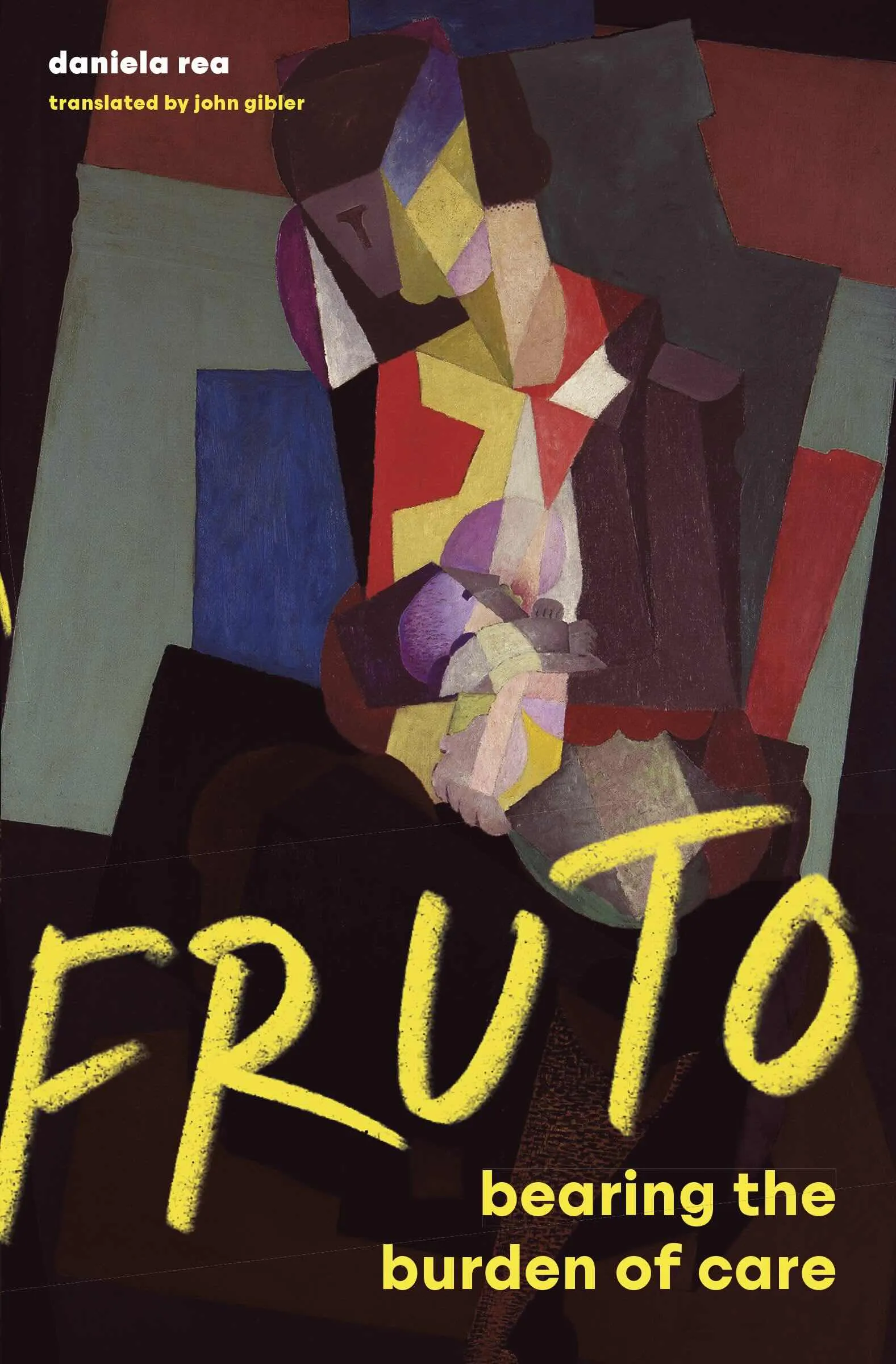

You’re accompanying me here, where I’ve come to interview the parents of the 43 disappeared students. We started by interviewing Don Berna, sitting on a patio. You slept holding onto me while I took notes. You woke up after a while and started crawling around and playing near us and it became impossible for me to keep writing in my notebook. Don Berna called you over and started playing with you. He held you in his arms so I could continue with my questions and note taking.
A Woman’s Work?
May Ngo on who bears the burden
Society requires caregiving in order to function. Overwhelmingly, it is women who shoulder the load. Adding her own voice to Mexican journalist Daniela Rea’s polyphonic account of motherhood and care work, May Ngo asks, ‘Where are all the men?’
Before I became a parent, I thought children just grew like trees. Mostly by themselves. Of course, the plant analogy is wrong, because trees need the right conditions to grow. But I thought those conditions would occur naturally when it came to childrearing, that Mother Nature would provide.
The wailing turns to a high-pitched shriek. My two-and-a-half-year-old daughter is flailing around on the ground where she has thrown herself, all screaming arms and legs. Just because she wanted to keep walking down one side of the street and I had said no, we need to go this way. I am already on a razor’s edge from a morning of kicking and whining about getting ready. I want to scream back at her. I want to punch a wall in frustration. This happens almost every day. I hate that this has become my life.
Daniela Rea is a journalist in Mexico, who, after giving birth to her first daughter, felt ‘devastated’. She found herself destabilised by her new reality and identity as a mother – the hormonal shifts, the exhaustion, the way that life is completely upturned when caring for a baby. As a way of trying to understand this new reality postpartum, Rea utilised her journalistic skills to interview women, including her own mother, about their experiences of mothering, and more generally, caring for others.
Originally published in 2023, Fruto has been translated into English by John Gibler, who is also a journalist who covers political and social issues in Mexico. The interviews are written as first-person accounts and are sometimes interspersed with the author’s own reflections, as well as quotes from different texts on mothering and caring, both fiction and non-fiction, from a rich catalogue of authors such as Adrienne Rich, Élisabeth Badinter, Silvia Federici and Toni Morrison. Also braided throughout the book are diary entries from Rea after she gave birth, sometimes with an added reflection on that entry from the present, putting the author in conversation with her past self. She continued this project after she gave birth to her second daughter.
Fruto therefore is polyphonic and non-linear: several voices speak in the text and Rea is always in dialogue with them. In addition to reflecting on her past diary entries, sometimes she comments from her own experiences on what interviewees have said. Other times, she addresses her mother or her daughters directly. Cumulatively, these multiple layers give us a bigger picture, a sort of bird’s eye view, of mothering and care work. The effect is also kaleidoscopic, with themes emerging that are varied and complex: mother-daughter relations, motherhood as a political act, mothering in various guises, and most of all, the fact that it is women who must bear the burden of care.
Adding still another layer are the stories of violence against women that Rea reports on in her work as a journalist, which she continues alongside taking care of her daughter – the ‘you’ of the following passage:
It is in relation to this larger context of nationwide violence that Fruto explores what it means to mother and to provide care. No link is explicitly made between care work mostly falling on women and the pervasive violence against women that Rea investigates in her journalism, but what does shine through in juxtaposing these two seemingly different contexts is how fragile and vulnerable women, mothers, and girls are in a society that inflicts violence on them in a multitude of ways, whether it be physical or less obvious, expecting them to take on the burden of care, to the detriment of their own well-being.
Rea realises early on in the book that stories of care work are relevant to all women, as ‘not every woman is a mother, but we have all nurtured and been nurtured’. In her interviews with women, including those in her own family, she recounts the many kinds of care work carried out by women: sisters caring for each other, girlfriends looking out for each other, daughters looking after mothers. In short, the act of ‘mothering’ is not limited to actual mothers. ‘What makes us mothers?’ the book asks. ‘Is there only one way to be a mother?’
I’m shocked at the enormous amount of energy and care that’s required to keep a child at, bare minimum, alive – a child who in the first few months and years of its life can do nothing for itself. Can do nothing by itself. All of my time is taken up by care work. And as for what it takes for a child to flourish – apparently you have to be a child developmental expert, nutritionist, chef, and therapist to make sure they get the optimal care. Childcare labour is truly invisible and I didn’t see it until I became a mother, until all I seemed to be doing besides taking care of the baby was cooking and cleaning, cooking and cleaning, on lack of sleep – a hellish, torturous Groundhog Day.
My toddler exists to thwart my will at every turn, at every little daily task. Getting dressed. Brushing teeth. Eating dinner. My will is shredded to pieces. My energy depleted. I’m at the mercy of changing weather, beyond my control. Of a tiny human being who feels so big to me.
Rea documents her realisation that the act of mothering is political and economical – that it is assumed women are naturally built to raise and care for a child. And that therefore the labour that goes with it is largely taken for granted. The care work undertaken by mothers is relegated to the domestic sphere with no support from the State, yet it fulfils an essential role in capitalist economies via reproduction of the labour force. She notes how for example, in Mexico unpaid care work in 2020 represented more than a quarter of the Gross Domestic Product, surpassing any other kind of economic activity like trade, manufacturing or construction.
Rea asks why, then, the rights of these unpaid ‘workers’ – not only mothers, but anyone taking care of children, the elderly, other family members – are not taken into account in the same way that the rights of other manual labourers are defended – those of miners, factory workers, etc. She writes about the initial shock, indignation, then fury at the realisation that, particularly as mothers, ‘our labour emotionally, socially, and economically sustains the State and, yet, goes unrecognised.’
Motherhood is the single thing that has radicalised me the most as an adult. I never knew or understood how much women had to bear, how much they did, and how much it went undervalued and unacknowledged, despite having had a mother myself. I became a mother in my forties, in another country, the Czech Republic, surrounded by an unfamiliar culture and language, far away from family. And motherless – by that time my own mother had already died from cancer six years before, in 2020.
From an email I wrote to a fellow writer and mother:
I feel like we’ve been sold a scam on motherhood – the ‘joy’ of it is a small part and doesn’t erase the utter physical and mental drudgery it is on a daily level. Why the hell wouldn’t we hate it most of the time? Who wouldn’t hate essentially being a servant to another being that screams and kicks and bites?
My sister visited for a few days from Australia a few weeks ago and I remember telling my husband that I feel human again. How her being here gave me back a bit of my humanity, because although she was here to see Mo Li, my daughter, she was also taking care of me, without being asked to or saying anything. Just little things like always pushing the stroller or taking Mo Li for an hour in the morning by herself. It made me feel like I mattered, like I’m also human and not just a slave to another being – being a mum often feels like the only thing that people care about is the baby. I guess I can only expect this kind of caring from my family and my husband which is why being away from family is so hard, I guess.
Mine was a particular experience of new motherhood, one in which I struggled with feelings of extreme isolation and powerlessness. But from reading other mothers’ experiences, regardless of the circumstances, this also seems common to some degree.
Who are we now, after a such a life-altering experience? ‘Matrescence’, an emerging concept popularised by Lucy Jones, contends that the physiological changes involved in becoming a mother are as profound as those of adolescence, involving a re-wiring of neural pathways in the brain, mind, and body. Despite this, the subject is barely acknowledged and under-researched.
During matrescence, mothers must also navigate a fundamental shift in their sense of self. Rea explores the split in her identity between being a journalist and writer, and being a mother. She writes about the juggling act that is being a working mother, especially in her line of work, which requires mental space and a lot of travel. In her personal reflections, Rea documents well the disconnect between work and the domestic, and how that split is actually lived in the same body, in the same life.
‘I’ve spent the past week editing stories from Safe Home, the childcare facility in Guatemala where forty-one girls and teenagers burned to death in 2017’, writes Rea. ‘Here by my desk, Naira constantly interrupts my writing and revision.’
As a writer, I have my own experience of this split. From another email to the same fellow writer-mother: ‘I’m writing this now in a play centre where my 2-year-old daughter can play so that I can do some work on my laptop […] So it took me over 2 hours to finish writing this email, because halfway through I had to attend to my daughter.’
All of the interviewees in Fruto work outside the home and act as the primary carers for their family. This double burden has long been documented by feminists: women gaining greater access to the workforce did not change their situation at home. Instead, unequal relations of caregiving continued, adding another layer of responsibility for women. Such information is not new. What astonishes me is what Fruto notes about the link between women having paid work and the increase of violent crimes against them – a connection drawn by feminist writers Marcela Lagarde and Rosa-Linda Fregoso in response to crimes against women committed in Ciudad Juárez. Women’s financial independence, and the threat it posed to their partner’s manhood, ‘became one of the motives for which women were murdered, just for leaving the house’. In short, more women entering the workforce did not solve the problem of domestic violence, nor of unequal care work. It seems that women’s changed status outside the home did not change anything inside it, except to make it worse.
Furthermore, women had to face harassment and other challenges at work. Fruto cites observations made by the feminist economist Verónica Gago, of how ‘neoliberalism creates the perfect soil for reproducing violence against women’.
Fruto is also brave in documenting how the relationship between mother and child, especially mother and daughter, can also be marked by violence, verbal and physical. Violence from other family members is already part of many of her interviewees’ experiences, especially from men – fathers, brothers. But there is also violence enacted by women in the course of their care work. It’s not easy labour, and then we take our frustrations out on our children. Rea’s mother, Rosario, tells her: ‘After hitting you kids with my slipper, came the anger with myself, the sorrow, and the regret. I’d feel guilty and then later, in a different moment, I’d try to compensate for it with a hug.’
It is brave to document this because straying from the expectation that a mother must always be nurturing and loving exposes one to judgement of the harshest kind, often reserved for mothers. To be a ‘bad mother’ is essentially to be deemed a bad person. It is judgement that refuses to see the burdens of the caretaking that women bear, that can push them over the edge. Addressing one of her daughters, Rea recounts reading from the throes of early motherhood about other mothers who were driven to extremes:
I read a story about a woman who was a star student and now has abandoned her three daughters, the youngest of which is twenty-one days old. You keep crying in the bedroom. At the end of the story there’s a link to other cases of women condemned in recent years for killing their children. I read them. They are shocking to me, but there are things, I think, that the news articles have left out. I can imagine myriad moments of delirium: in their houses, in the bathroom, in their rooms, alone. Women alone. You can lose your mind at any moment, go crazy, want to run away. Now I’m the one who can’t stop crying.
Like Rea, I can imagine these moments of delirium. How many times did I want to leave my baby, never to come back? To leave the isolation, the constant crying and wailing? The relentless demands on my body and mind, the drowning in myself?
Rea writes, ‘I also think of this dual condition: there are days like this when I know my arms are the safest place for the girls, but there have also been days when I know that I am the biggest danger they face.’
Again, I can relate – many times over, but by way of recent example: as part of our bedtime routine we read my daughter stories, and she always wants ‘just one more’. One night I had laryngitis, from an infection I caught from her – she had recovered but I was still battling it. After reading the third story I thought she would finally agree to go to sleep, but instead she asked for milk. I would have to get out of bed and go to the kitchen to fetch it. I was tired and closed my eyes and didn’t reply, hoping that she would just let it go, but of course she kept asking for it. ‘OK!’ I screamed. Her eyes filled with tears and she asked for her daddy. She did not want me to put her to bed, she was afraid of me. I apologised but she could not be consoled: she wanted her father.
Rea also documents how becoming a mother made her need her own mother: ‘I write and affirm: ever since I became a mother, I need to be the daughter again.’
Despite not having a good relationship with my mother when she was alive, I can attest that there is an exquisite longing for your own mother once you become one yourself. A motherless mother is the saddest thing.
It is also, perhaps, in becoming a mother that we become more curious about how our mothers managed it, that we finally become interested in our own mothers’ stories. That was the case with Rea who now recalls how Rosario would ‘collapse[] in bed and [make] us believe that she was lending us her body to play with, when actually she was exhausted.’
No stopping hands, my mother used to say in Teochew, our mother tongue, when I was a kid. Eyes closed shut and just keep going. I understood her words: she was tired and overwhelmed but couldn’t rest. At the time I had no idea why she was so exhausted, or that we four kids and her working seven days a week could be the cause.
The book notes that the Spanish word for care, ‘cuidar’ stems from the Latin cogitare, which means to think, to pay attention to. To take care of someone is to attend to the daily needs, material and immaterial, that will keep a person alive, according to the journalist Carolina León. It is emotional labour. It is both thought and action. It is never just physical. What might be the benefits of sharing the burden of this emotional labour, of being cared for even as we undertake care?
Fruto floats the idea of collective childcare, of learning from other women, past and present. Of women telling each other stories and memories, of coming together to learn from each other:
Sometimes I don’t have any answers for you, my daughters. Sometimes I don’t know how. I don’t have the patience or the words or the time for you. But other women speak to us. I don’t always succeed in being your mother. I don’t always know how to do it. I turn to other women to learn.
This call for a village to lean on in raising our children is undoubtedly necessary. But for all of Fruto’s focus on looking beyond mothers to carry out the responsibility of carework, there is an unspoken topic that it doesn’t breach – the absence of men. The community Rea imagines seems entirely female. Where are the men in all of this? Partners, fathers, sons?
As I read the passages about Rea’s struggles with caring for her daughters, I kept wondering, What about Ricardo? (Ricardo is her partner). He is mentioned as helping here and there (‘Ricardo gets up with me, he makes me some tea. He caresses my back’) but often it is Rea feeling that she has to do it all. For example, during a therapy session she lists all the things she has to do for her household daily, including ‘that my partner have time to ride his bike a bit before going to work’, before concluding it was no wonder she was having a breakdown. What about her partner in all this? Why is he not helping her to manage those tasks?
Perhaps he is working. She mentions once that his job keeps him out until midnight. But she is also working. Why does his job let him off the hook, but not hers? She addresses her daughters: ‘I think I needed to find another way of working through those feelings as a mom and not take it all out on you all. I think that’s possible when you talk about it with someone, when you share the parenting with someone.’ In reading this, I thought, where is this partner whom she is supposed to be sharing the parenting with? She does not unpack why she feels like she is parenting alone.
Rea does this again, when documenting a time she blew up at her daughters. Enraged, she tells them, ‘I have four jobs, for fuck’s sake: work, homeschooling, childcare, and keeping the house clean and I’m only one person. Do you two think I don’t get tired? Can you be a little more considerate?’ Again, I find it telling that she says she is ‘only one person’. Where is her partner? What does he contribute? It is something Rea never reflects or elaborates on.
There is a phenomenon that has been articulated recently, of the ‘married single mom‘, where ‘one parent, usually the woman in a heterosexual relationship, often winds up with more responsibilities, seen or unseen’. It’s not necessarily that the other parent doesn’t do anything at all, it’s that the ‘default parent’ will carry most of the load regardless of having multiple other responsibilities. Recent research on the gender gap has shown that women still take on more of the household tasks than men, even when both are working.
Most of the mental and emotional labour seems to fall squarely on Rea, in addition to the physical labour. She talks about the housekeeper, Laura, who comes in once a week to help take care of the house, and notes how ‘we need other women to take over the domestic care work, to fill the void we leave in this space we call home’. But, as she also notes, briefly, this just outsources the work to another woman: ‘I leave the home to work; Laura leaves her home to work.’ But who fills the void for the other woman at home? What about husbands and partners contributing to fill that void instead? Fruto falls shy of interrogating this state of affairs, and therefore the solution defaults to a neoliberal paradigm: outsource the labour to other, usually poorer, women so that richer women can live like men.
The only way to get out of this structural trap for women is to demand more from men – from our partners, fathers, brothers. But I know this won’t happen.
I sit in front of another mother of young children. I’ve come to know a lot of new mothers since I became a mother, as a way to gather that elusive ‘village’ that, these days, we have to build ourselves.
She tells me about the period when she went slightly insane with two toddlers, while working, while also doing all the household duties. Despite constantly asking for help, her husband kept agreeing but not actually acting on what he said, until she had a crisis and they decided that she would stop working. This eased the situation, but of course this meant that everything domestic fell even more heavily on her shoulders. She feels better not having the stress of balancing work and family, but it means that she is also not getting fulfilment from having a job that she likes, and it also means that her husband is off the hook in terms of helping with household tasks.
But, she says, he is much better. He does some things now.
What does he do? I ask.
Oh the things I don’t like to do: deep cleans the oven, deep cleans the dishwasher. I give him points for that.
Something that needs to be done every few months, if that, I thought.
This in turn reminds me of another conversation I had with a mother who said that she would get so hungry feeding her baby before herself at dinner time. I bit my tongue and didn’t ask why her husband didn’t feed their baby sometimes so she could eat first – out of care and concern for her. How some husbands treat their wives – in ways they wouldn’t treat their friends. This same mother said her husband doesn’t know how to cook. (Can’t he learn?) But he’s not that bad, he takes out the bins so she’s grateful for that. (Again, women being grateful.)
The term ‘weaponised incompetence’ comes to mind whenever I listen to mothers speak about how their partners can’t remember key things like dates or appointments or what needs doing around the house. ‘They’re just not capable.’ ‘It’s not their fault.’ Yet they can remember everything they need to for their paid jobs.
Loving our partners, but knowing that they will not change even for us; what is there to do but to accept and to tell ourselves it’s not that bad? That we are grateful for the little ‘help’ that we receive?
I would be remiss to critique how Rea leaves out reflecting on her own partner’s role in parenting without talking about my husband in my own reflections on motherhood. In terms of domestic work, I would say that once I voiced my need for more support around the home my husband did step up. He takes care of all the laundry, and I used to feel grateful that it was something I no longer had to think about. But again – this being grateful instead of seeing it as his responsibility, as his necessary contribution to the household.
And there were other ways in which it felt like he left me out to dry: I had to beg and cajole for several months to get him to agree we could go back to Australia to see my family because I fell into a depression after giving birth and felt so alone in the Czech Republic; he complained he had no time for himself anymore, even though every evening it was me who put our baby to bed because I was breastfeeding her to sleep. When I told him I was having a hard time, he said, ‘What about me?’ After I was hospitalised briefly during pregnancy he was upset because I didn’t want to go to his family’s event the next day. Once the baby was born, we would drive nearly an hour to visit his family and stay for over five hours. Then he would get upset with me when I said I was exhausted and needed to go home. All this while still bleeding, breastfeeding and sleep deprived. I remember feeling so alone and like I had to think about everyone else’s needs except my own. He didn’t understand how incredibly difficult and overwhelming it all was for me. Especially because I was doing it in a foreign country with no family of my own. I had to often explain and argue a lot for my needs, which just depleted me even more.
The experience of giving birth to new life is, paradoxically, like being at death’s door. And then, once you’ve given birth, you are completely changed – another kind of death. Meanwhile you’re also trying to heal physically and mentally and look after a newborn that needs constant care. The cultural belief still persists that motherhood is natural and instinctual, and therefore a new mother should be able to handle it all – which fosters the assumption that women therefore are more naturally equipped to provide care, both physical and emotional, and do all the domestic work. Little, if any, contribution from the father is expected. Such beliefs also allow people to dismiss or minimise a mother’s struggle or exhaustion, as my own partner did.
As much as caring is what makes us more human and humane, bringing us together, creating community, Fruto also acknowledges, ‘Caring is tiring. Caring destroys. Caring devastates’, and that ‘caregiver burnout’ is a real thing. Yet it is only women who will be in danger of this, and not only due to the State’s inaction, but also, if we are honest, due to the men in our lives.
Once I became a mother, I got bombarded with all the things I could buy for my own ‘self-care’ – yoga classes, easy meals, nutrition advice, gym workouts. Consumer capitalism targets mothers and mother’s guilt like nothing else. But all this emphasis on ‘self-care’ directs us towards individualising the problem, focusing on spending as the answer rather than scrutinising the larger structures and cultural expectations that make being a mother so exhausting – including the lack of any expectation that men do care work. Consumer self-care has replaced the village and becomes something else a mother is responsible for.
It is alarming to realise the unspoken, the almost taboo, word in this context is ‘men’ – as partners, as fathers, as co-participants who should have as much at stake – despite these being their families too, despite it involving their wives’ health and mental sanity. And it shouldn’t rest only on individual women to demand more from men – we are already exhausted and depleted. I suspect women often end up accepting the situation and telling ourselves it’s not that bad because what else can we do? Perhaps it is also difficult to call out men because we love them and because it would feel like a betrayal to do so.
The state and society should provide material support, and we already know what that should be – more parental leave, financial help, better access to mental health support, cheaper childcare. But there also has to be a shift in how we talk about care work and who is doing it. It is not about hating men. It is about interrogating the role of a key stakeholder in the structure that is parenthood and family. Without this cultural shift, I’m not sure much can be changed, and again the burden of care will fall on women.
Interestingly, Fruto comes to us in English via John Gibler, a man. The translation seems to have been done with a lot of care – in a conversation at a book launch of Fruto, Rea thanks him for being a witness to the book and her parenting. Translation is, arguably, a form of care work in itself, requiring deep listening and a sensitivity and attunement to another(‘s text). It demands paying attention to the other and finding the words for them in translation. And as much as it might receive more recognition compared to care work in the domestic sphere, it is also often dismissed or undervalued (for example, the translator’s name can be left off the cover of a book). Crucially though, it is paid work, and more acknowledged than the kind of care work in the home documented by Rea.
Fruto does a brilliant job of drawing attention to and calling for the recognition of the unpaid, hidden labour occurring in the domestic sphere that is often done by mothers and always by women. Its appeal to society and the state to step up is done in a very compelling way –Fruto’s multi-layered, fragmented, and winding structure mirrors the experience of motherhood, and also captures how entangled motherhood is with other issues: parent-child relations, the invisible labour of unpaid childcare, reproductive labour, gender relations. But despite Fruto rightly politicising motherhood and calling for care work to be valued and the rights of carers to be defended, there is a conspicuous missing piece: a failure to question why the labour of care mostly falls on women and what the role of men should be, which is perhaps reflective of our wider beliefs around who is supposed to do care work and who doesn’t have to.
My husband says that when my daughter reads this review or anything I write about the difficulties of motherhood she will think that I didn’t want her. Of course, that’s just another way to censor women and keep them from telling it how it really is. If anything, it’s exactly because I have a daughter that want to talk about it. Because I want her to go into motherhood, if she chooses to, with her eyes wide open. Because I want things to change for her and the next generation. Because the consequences of leaving this unquestioned means that women will always have to bear the double burden of work and family, that it will continue as long as there is never a demand, never a holding to account, for men to bear the burden too.