
the largeness of the head against the innumerable hues, the shoulders, the neck praying. A crawl, a breaststroke, it hides and recovers the ear, the nostrils, the lips gathering and then holding breath, the eyelids closed, the hands like glass dropped from the counter, cutting completely into skin, or some other material, a lace curtain.
Lost in the Scene
Alix Beeston on Giada Scodellaro and the ruin form
Alix Beeston reads the enigmatic ruin that is Giada Scodellaro’s debut novel about a community eerily poised between endurance and fracture. Scavenging for metafictional clues, Beeston discovers a playfully oblique paean to Black cultural life.
In ‘Ceremony’, a short story in Giada Scodellaro’s debut collection Some of Them Will Carry Me (2022), there is a dilapidated and disused church. This ‘crumbling place’ has no doors at its entrance and the wall behind the altar is missing. A group of people enters the space for a ceremony without traditions. ‘[W]hile the official delivered a sermon’, the narrator tells us, ‘people danced in the aisle. Or people did what they felt.’ Sleeping, pacing, speaking on the phone, lying on the floor, flying kites, riding bicycles, sharing food: the people’s ‘abandonment’ is licensed by the building’s ruin. ‘We were gathered here against its intended purpose, and once a place is left or re-inhabited against its purpose the rules and regulations change’, the narrator says. ‘The people took the place over, made it something else.’
The setting of Scodellaro’s first novel, Ruins, Child, is also described as a ‘crumbling place’. The seventeen-storey apartment block – the tallest among a complex of thirty-five buildings housing some 55,000 people – is falling apart. Its lower floors are at risk of flooding as the salt marshes below the building sink almost an inch every few months. ‘There’s nothing to be done about it’, laments one of the seven Black women at the novel’s centre, ‘this place is inhospitable’. She means the whole neighbourhood, the Hill, where both church and school have been burned down and nothing new is being built. ‘The government repeats’, another of the women says, ‘they tell us over and over, “Let the pieces fall if they must.” Well, this shit is right falling apart, you understand?’ Yet despite governmental neglect and environmental risk, for Vonetta!, the woman whom the six other women follow, the Hill is ‘a place we’ve created for ourselves, okay? Or a place we were forced into and have reimagined.’ Sticking up family photographs on the windows, slicking bright orange paint on the walls, and wrapping plastic around the furniture, this ‘makeshift family’ has ‘made something’ amid the ‘chaos and sinking’.
This crumbling place, too, is transformed through collective ritual. At the opening of Ruins, Child, the residents of the Hill are immersed in the Holiday, an annual viewing of an ever-lengthening documentary film of the community’s history. A jumbled compilation of scenes that’s recut and expanded each year, the film’s latest version clocks in at 168 hours. For a week, all the residents, adults and children alike, take turns sitting on the living room floor of one of the apartments as thirty years of their shared life play out on the TV screen. ‘Everything we did once, we still do’, reflects the unnamed narrator. These unbroken habits include the watching of the film, the watching of themselves watching the community’s earlier iterations. Gestures, actions, and bodies are doubled and tripled in mise en abymes staged between days and decades. The Holiday offers the community an assurance of consistency and endurance that counters the decay eating away at their home. ‘This is how it is, and how it will be’: the government’s mantra for the Hill, its refusal to intervene to stem the area’s decline or protect its inhabitants from environmental dangers, is reclaimed by the residents as a motto for their communal living, which is cast as inevitable and unending.
Like the ceremony in the abandoned church in Scodellaro’s earlier story, the Holiday is a ritual for ‘re-inhabiting’ the Hill ‘against its purpose’. But a repurposed ruin remains a ruin; it wants to crumble to pieces. In ‘Ceremony’, the group’s joyful abandon curdles as the ceremony stretches into the night and then, to the congregants’ surprise, is resumed the next day. Tired and bored, the people in attendance complain and are reprimanded by the leaders. Finally, the leaders take them to a fast-food restaurant, where they order and consume meals they don’t want under the harsh fluorescent lights. The story concludes: ‘We sat or stood to eat, we burped, and we didn’t speak a word.’ I find it hard to imagine a more complete deflation of the anarchic, pleasurable collectivity – the ruin’s carnivalesque promise – with which the story began. Similarly, in Ruins, Child, the Holiday produces only an illusion of the apartment block’s permanence. Towards the novel’s end, there are ominous intimations of the ritual’s suspension and aftermath. ‘Later’, the narrator tells us in a strange, prospective grammar, ‘when the tapes come out we are already gone, dust, dead?, and when they are distributed widely enough they will call it a mess, a goddamn mess’. Finally, the threat of disaster that hangs over the novel erupts in an earthquake that wrenches apart the building: ‘down the hall the split was clean and decisive. The water stood on its high legs.’ In her apartment, Vonetta!’s bed becomes her ‘soft grave’.
The winner of the prestigious Novel Prize, Ruins, Child treats the novel form itself as a ruin that invites renovation, the application of ‘new rules and regulations’. The novel is a space Scodellaro occupies to make it something else. Witty, lively, and – for me – almost woozily disorienting, the book largely eschews the conventions of linear storytelling in favour of a fragmentary and iterative narration that draws on the formal resources of other media, principally film. It is broken into four parts. In the first and third parts, ‘the film’ and ‘the film continued’, the collective narrator – positioned as a group of apartment block residents spying through a window or listening through a wall – bears ‘witness’ to the ‘dysfunction/harmony’ of Vonetta! and the six other women during the week of the Holiday. Vonetta!’s six close friends and acolytes ‘shadow’ and ‘scale’ her, ‘moving as a unit’. ‘Here come the six,’ the neighbours say of them, ‘the six mix, here they are: the six fix, six peas in a pod, the six horsemen, the six kingsmen’.
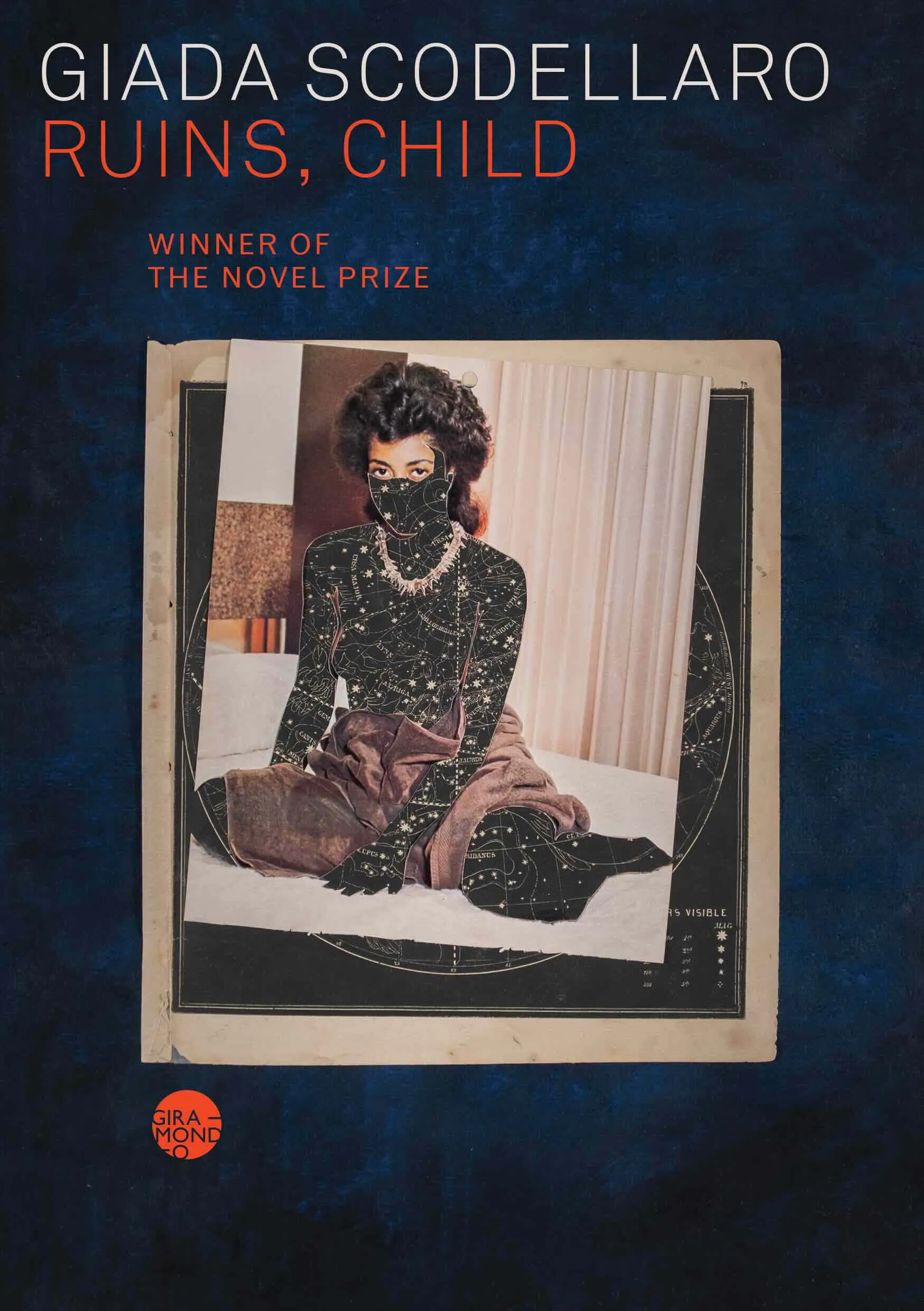
Interrupting these two sections is ‘the text’, an extended piece of writing in Vonetta!’s voice, which relates a brief trip away from the Hill she made with the six. The text in this part is indented at irregular intervals, such that each sentence is riven by blank spaces; occasional words are also omitted, marked out as ‘illegible’ or ‘redacted’. These obstacles to smooth or uninterrupted reading are prioritised in the book’s fourth and final part, ‘the sound’, which intersperses phrases or versions of phrases from earlier sections of the book with a collection of citations from other works, largely drawn from Black American literature and culture: poems, novels, memoirs, artists’ sketchbooks, newspaper articles, and more.
Making a show of resisting the novel’s self-containment and arc towards closure, Scodellaro’s book still produces the pleasures of suspense and (partial) revelation associated with the mystery genre. The sense of impending catastrophe – as the waters rise inexorably, the flowers bloom and die in the span of a day, and the seasons flee to the extremes, ‘tropical or freezing’ – gives the narrative a sense of nervy momentum. So too does the fact, or enigma, of Vonetta!’s pregnancy, which like her is apparently endless. The neighbours gossip about Vonetta!’s age: ‘Hasn’t she been around for all of time?’ She could be, they speculate, either sixty-five or a hundred and five; she might be thirty or sixty years older than her sister Mona, one of the six. And the neighbours gossip about Vonetta!’s baby’s coming – or not. ‘The woman has been with child for half a century, five decades, six, and it’s quite boring for someone to be pregnant for so long.’ It’s boring, no doubt, but it’s also a rich source of intrigue, for the neighbours and the novel’s readers alike: ‘Where is the child?’; ‘is it coming?’ The neighbourhood’s questions give the narrative its anticipatory drive, even if the novel remains suspended with Vonetta! in her impossible state of pregnancy and not-pregnancy, carrying a baby that’s always and never arriving. ‘The baby comes and goes,’ Vonetta! writes in ‘the text’: a Schrödinger’s cat in her eternal womb.
In lieu of this unsolved mystery, this unresolved plot, Ruins, Child gives us other delayed gratifications. It’s several pages into ‘the text’ before Vonetta! is clarified as the writing’s origin; and it’s not until the very end of the third part – at the same moment as the earthquake – that ‘the text’ is revealed to be a script Vonetta! has written on her body, ‘beginning at the back of the neck [. . .] finishing up at the sole of the foot’. Discovered by the neighbours in the midst of their panic, the ‘landscape’ of text on Vonetta!’s skin is a revelation that diverts attention away from the building’s apparent destruction. It scuppers what might have been the novel’s dramatic climax. But it achieves a satisfaction of a different order. When I first encountered the surface experimentalism of ‘the text’ – the indented spaces, the missing words – it felt somewhat arbitrary or unanchored to me in narrative terms. I started reading the sentences aloud to string them together, to better leap across their gaps and potholes. It was satisfying to feel them gain coherence and continuity in their translation into my voice. Satisfying, that is, to find that they had coherence and continuity. This feeling was repeated, and intensified, when the novel’s tragic final act ceded to the matter of Vonetta!’s tattooed body bearing ‘stretch marks of an a b c [. . .] or the old scars forced to call—’. Making retroactive sense of the unconventional typographic features of the earlier part of the book, Ruins, Child’s denouement offers the pleasure of an experimentalism explained and justified. What’s resolved is not the plot (does Vonetta! really die? will the baby ever come?) so much as the narrative basis of the novel’s form.
Voices are heard before they’re anchored to characters; narrative events are teased before they’re more fully revealed. This pattern of suggestion and disclosure made me want to solve at least some of the many mysteries Scodellaro’s novel throws up – although that impulse also felt like a transgression of the book’s wilful, playful obscurity. Indeed, the novel’s world is at once murky and vivid, as if it’s being viewed, as Vonetta! is in the film at its opening, through a camera lens ‘covered in grease’. The narration reminded me of what the Black American video artist and filmmaker Arthur Jafa calls ‘oral logic’ in Black independent film, and specifically in Charles Burnett’s Killer of Sheep, a 1978 masterwork of the LA Rebellion whose poetic, scenic depiction of the daily rhythms of a working-class Black community shares much with Ruins, Child. In a 1995 interview with bell hooks collected in Reel to Real, Jafa describes Burnett’s ‘vernacular way of structuring events’ as analogous to Jafa’s mother’s patterns of speech during their private phone conversations. ‘I tape the conversations if I can, because it is really fascinating to look at how she structures events and sequences’, he tells hooks. ‘She’ll start off talking about somebody’s birthday, and then she’ll go to talking about the sale, you know, the sale that was on at the grocery store, and then she’ll be talking about my aunt who just died. And if I just put it down literally, it would be as avant-garde as anything James Joyce ever did.’
Scodellaro’s way of telling, similarly indirect or deferred in its logic, is partly achieved through its thicket of allusions and references to real-world places, events, and persons. It’s also undermined by those references, which arrive like a box of clues to mysteries that the novel otherwise works hard to establish. The origins of certain phrases and conceits are given in the notes in the book’s backmatter. The Hill, we learn, is ‘a place among the works of August Wilson and Toni Cade Bambara’; it’s also based, we infer from Scodellaro’s citation of a 2017 article in The New York Times, on Co-Op City in the Bronx. Co-Op City, the article notes, is ‘a 35-building complex with more than 50,000 residents’ bordered by degrading salt marshes. Through the effects of climate crisis, these ‘fields of tall grass, known as Spartina alterniflora’, have become a swamp of ‘[m]uddy flats’. There are several black-and-white photographs interleaved through Ruins, Child, whose relation to the text is opaque; one of them is identified in the notes as an aerial picture of Co-Op City during its period of construction in the late sixties.
The fictional and the non-fictional are grafted together in Ruins, Child, like a garden both deliciously wild and assiduously cultivated. Its litany of literary and cultural sources, only some of which are identified in the notes, sets up a game of recognition whose reward is the gratification of catching the references as they come. Dionne Brand, the poet and novelist, is described as one of the neighbours (the real Brand supplied a blurb for Ruins, Child that praised it as ‘conceptually rich, prismatic, and choral’). ‘Audre Lorde eats a mango like that’, a kid casually says in response to an image of a woman sucking messily on the fruit in the film during the Holiday. One of the six is called Sanaa Lathan, the name of the actress whose credits include the classic late-nineties Black-led sitcom Moesha, the 2000 romantic sports drama Love & Basketball, and the HBO black-comedy juggernaut Succession. Even before Lathan’s name appeared in the text, I’d pencilled Vonetta McGee? in the margins next to Vonetta!’s name, referring to the actress who starred in spaghetti westerns and blaxploitation films in the seventies. Initially, all the women apart from Sanaa are referenced only by their first names, but the presence of ‘Sanaa Lathan’ in the text invites us to look for Black actresses who could be their real-world referents: Seret – Seret Scott? Mona – Mona Scott-Young? Pearl – Pearl Bailey? Beryl – Beryl Cunningham? Jackie – Jackie Taylor?
‘So there are layers to this’, says the narrating we of the apartment block at one point, speaking of the film’s avant-garde superimposition of images and sounds. No kidding. There are so many layers to Ruins, Child, so many tantalising traces of famous figures and other texts. But it’s not always clear what they add up to. I google Vonetta McGee and come across her 2010 LA Times obituary, which quotes an interview in which she compared her career to that of the superstar actress and musician Diana Ross: ‘She has had the luxury of a studio behind her. This is where a lot of us fell short. We all needed a certain amount of protection. But we were on our own.’ Diana Ross is a fixture of Ruins, Child: there’s a wonderful sequence in ‘the text’ in which Vonetta! and the six craft an extended reading of Ross’ scenes with her romantic interest, played by Billy Dee Williams, in the 1975 dramatic feature Mahogany.
And Billy Dee Williams is also a character in the book. Sanaa Lathan, who is an actress in the novel as in life, appears alongside Williams in a film within the film shown during the Holiday. Vonetta!’s sister Mona and Mona’s lover Burle (who was also once Vonetta!’s lover, and who may be the father of her ever-unborn child) are sitting on the plastic-sheathed couch watching a film on the TV. In it, ‘three fools [are] stranded out at sea’. Two women, one of whom is played by Sanaa, tread water alongside a man played by Williams. The residents of the apartment block ‘know the face of the man’, but not only because he’s a famous actor; they think they see his features in Vonetta!’s and Mona’s faces, a pattern emerging from – or generating – the rumour that the two women’s ‘daddy could have been Billy Dee Williams’. Though this reference isn’t mentioned in the notes, the film works as a redux of Mário Peixoto’s Limite (1931), a silent experimental film in which two women and a man are lost at sea. But where at the end of Peixoto’s film the trio loses hope and simply stops rowing their boat, drifting toward an unknown fate, in Scodellaro’s version the two women drown the man: ‘Billy Dee Williams is gone, submerged, already perished.’ And the cast of this film is a generational jumble. The real Lathan and Williams have never performed together, as far as I can tell, and in fact Williams is a contemporary of Lathan’s father, the director Stan Lathan. Actually, I learn from my web searching, the two men were friends; Lathan once said that as a five-year-old she had a crush on Williams.
It’s fun to follow these routes out of and back into the novel, even if I don’t quite know how to bring to bear on the text the knowledge that, say, Vonetta McGee envied Diana Ross, whose performance in Mahogany Vonetta! so skilfully analyses. Likewise, when the novel eventually clarifies that the surname of the woman called Seret is Scott, it’s difficult to say how that relates to the surreal conceit that the novel’s Seret, as Vonetta! writes in ‘the text’, ‘decided to stay as she was/is . . . She was a teenager then and she is a teenager now. She decided this, forty some odd years ago, fifty, that her life would be made in the eleventh grade . . . She is an academic, you see, and she remains so.’ This is a playful reference to the fact that Scott, in real life, played the philosophy professor who is the protagonist of Kathleen Collins’ groundbreaking 1982 independent feature Losing Ground. Which I suppose means that the novel’s Seret is forever young because she, like Scott’s character in Losing Ground, belongs in the classroom. But then Losing Ground later appears in Ruins, Child among a list of titles that the fictional Seret has watched repeatedly at her high school – an inclusion that tightens the character’s point of reference while also making the terms of that reference somewhat harder to hold onto. Navigating these choppy intertextual waters, I found myself recalling a line from the novel’s first part, in which the narrator describes the characters watching the 168-hour film: ‘we are lost in the potential of this scene’.
What I’m getting at is that Ruins, Child seems to want its readers to get its references, to solve (or at least set out to solve) its riddles – but also to not want them to. In a recent interview, Scodellaro frames the novel as a way of ‘thinking’ about ‘[t]he archive as form […] a record of place’, and about how historical and cultural ‘information’ circulates or doesn’t: ‘how it is collected, preserved, or alternatively, omitted, altered’. A primary function of Scodellaro’s blending of the real and the fictional is to locate the novel within a deeply layered and distinctive Black cultural world: a world that embraces, as she put it in the same interview, ‘Diana Ross as Black canon’. In this sense, the (almost) writing of Vonetta McGee and Sanaa Lathan and Seret Scott into the novel equates to an experimental kind of fan fiction, constructing a mirror world in which Black actresses and authors take up surprising new roles. It expresses a generalised Black cinephilia and connoisseurship of Black culture. The extent to which a given reader shares in these things will determine the degree to which the book might be said to be written ‘for’ or ‘to’ them. In other words, the novel isn’t merely situating itself within the Diana Ross canon but is hailing the community already formed around that canon.
Regardless, Ruins, Child is a heady mix. The strongest aspects of the novel also distinguish the stories in Some of Them Will Carry Me. Scodellaro has a gift for visual description that’s carefully calibrated to denaturalise habitual ways of seeing or knowing. ‘Isn’t the leg a line?’ Vonetta! asks at the beginning of the novel as she reaches down to tie her shoe. This concise gesture, converting body to space, returned me to stories like ‘Adult Head’, a single paragraph in which Scodellaro makes the image of a person swimming ‘not what you believe it to be’. ‘An adult head’ moves in and out of water that is ‘a mountain’ or ‘a field in wind, or a mass, so big, pointy or rounded like laundry’. The prose captures:
Depicted as it is seen from poolside, the swimming body becomes a collection of defamiliarised parts – a neck bowing in supplication, an ear lost and found – as it slices across the water’s surface. And that surface, likewise, is remade by its description: it is as taut and violable as fabric or flesh.
Scodellaro’s worlds are flush with our own, grounded in material and bodily details that feel familiar and solid. But there’s something in them that’s uncanny, a bit off; the rules and regulations, like in the ruined church in ‘Ceremony’, are subject to change. In Ruins, Child, the waters are climbing and the seasons radicalising, as they are in our world; people have jobs to go to, apartments to keep clean, and rumours and sex and roast dinners to share. But a baby can choose to remain unborn and a woman can choose to remain a teenager. And there’s also a girl nicknamed Matches who may or may not have burned down the school – and who may or may not be able to fly.
The balance of the real and the surreal is, I think, less well managed in the novel as compared to Scodellaro’s short fiction, where the form’s brevity seems to offer a measure of containment. In excess of the novel’s obviously intended ambiguities are narrative problems that have a destabilising effect, testing its foundations (or my belief in them). It’s unclear who’s filming the community: sometimes it’s members of the six or maybe other residents of the apartment block, but other times it seems like it’s outsiders. At one point the women sell their camera equipment, yet in the next scene the camera’s still rolling. Vonetta!, meanwhile, tells changeable stories about her past, a set of anecdotes with a revolving cast: first her mother names her and then her father does; first her father falls and his head is ‘split open like a melon’ and then it’s her lover Burle who’s lying on the street as ‘[l]ittle seeds burst out from his open head’.
This all flows into the wash of the narration, its artful obscurity and undecidability. And Ruins, Child builds in its own meta-justification as it allies Scodellaro’s experimentalism to Vonetta!’s countercultural impulse towards invention and improvisation. Vonetta! works as a landscape designer, or at least she does until she’s fired because, the higher-ups tell her, ‘To be innovative is to be out of line, darling’. ‘Invention is akin to sinning!’ is the rule of the bosses (white) and the government (also, implicitly, white). ‘It’s okay to mend or fix things, to hammer them together’, Vonetta! knows, ‘But creating something altogether new—no’. Vonetta!’s design practice prioritises ‘circulation’ over beauty or function, ‘restraint, flexibility, proportion or time’ over environmental concerns. ‘Land in disuse unintentionally made whole, if not a little dangerous’ is, the narrator tells us, ‘her thing’. I’ve sat with these somewhat abstract descriptions of Vonetta!’s practice, but I feel like I can’t quite parse or organise them. More generally, the novel’s narrative structure – in its inventiveness or its circulation or its unintentional wholeness – feels a bit thin or rickety to me. If it’s easy to find metatextual metaphors in a text this knowingly referential (‘So there are layers to this’, ‘we are lost in the potential of this scene’), one might be forgiven for judging it to be ‘unmoored’ like the apartment block at its centre.
Or it could be a ruin: a crumbling edifice that may be repurposed for a night or even several decades but that in the end falls apart. ‘Only those who are belated can observe a ruined form’, the cultural critic Susan Stewart writes in The Ruins Lesson. ‘We may witness ruination, but we come upon a ruin. A certain distance and estimation of damages are involved; the current state of things will be compared to what was prior and depends on an ability to find the ruin intelligible.’ Perhaps Ruins, Child – like everything else – holds together only for a time. And perhaps it holds together only in Vonetta!’s eyes, or on the surface of her body. For she, with her ‘belabored’ pregnancy, is a figure of lateness, but a lateness in synch with the novel’s slippery, suspenseful temporality. ‘Her lateness is one of sincerity – she sees things as they are’, the narrator insists. ‘She is only late because everyone else wants to have the upper hand! They all want to live in the near future.’ The present has reached, as Vonetta! writes on her own skin in ‘the text’, ‘a point of no return’ – and she’s the only one who’s late enough to see it.