Our work is made possible through the support of the following organisations:

SRB logoSRB logoSRB logoSRB logo
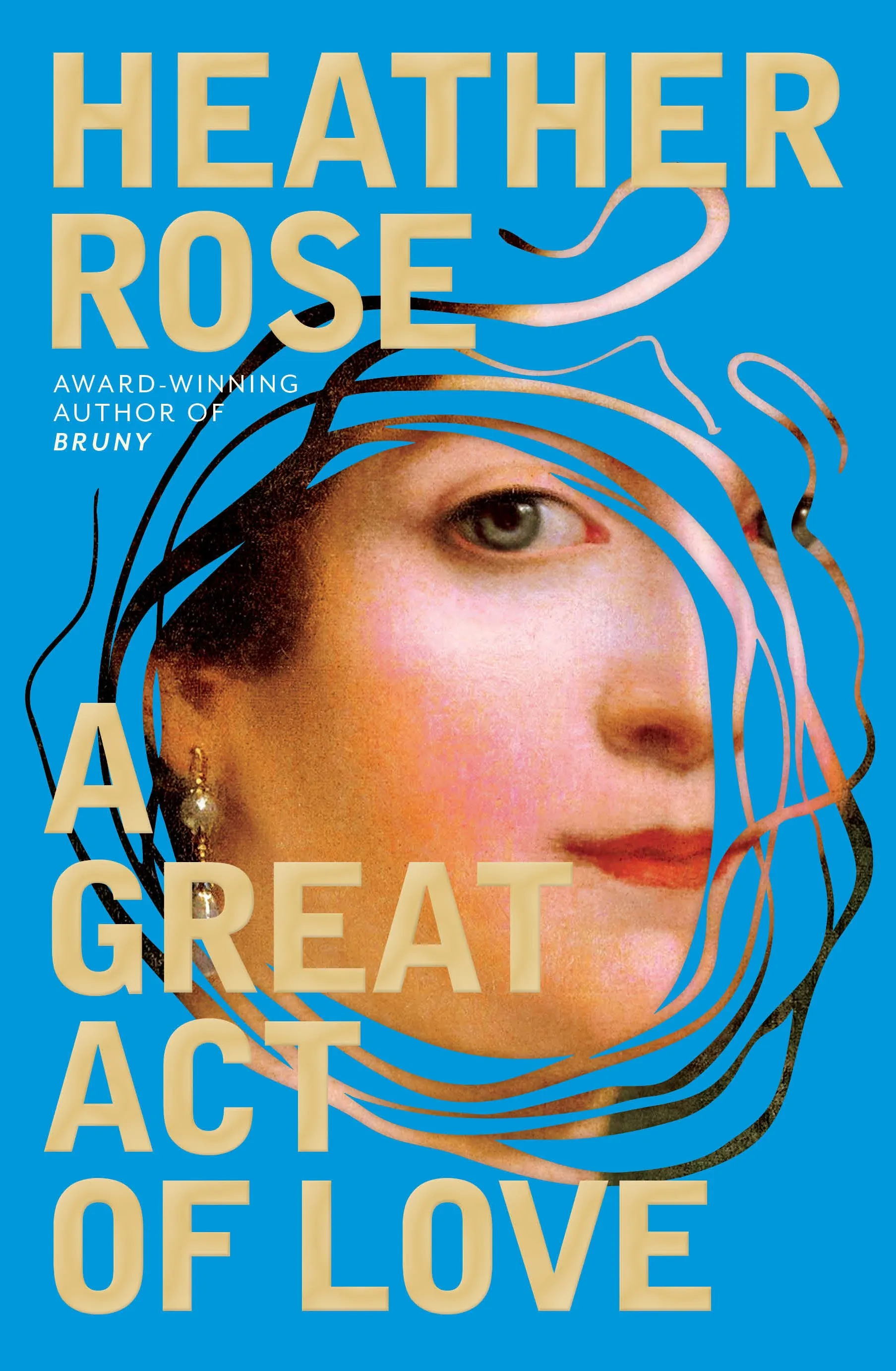
Book Cover for 'A Great Act of Love' by Heather Rose

A Disrupting Darkness

Edie Mitsuda on responsible representation in fiction

Email to a friendEmail

Reviewing Heather Rose’s new novel, Edie Mitsuda weighs up the ethical burden of writing characters marked by histories of slavery and colonisation. What are the responsibilities in resisting what Toni Morrison called ‘the economy of stereotype’?

‘A white woman could be the most dangerous thing in the world’. This is according to Cornelius, anyway – one of Heather Rose’s characters in her most recent novel, A Great Act of Love. It’s an interesting comment considering Rose’s own position, the implication being that she, the author, has the capacity to inflict harm in the same ways that have made Cornelius so wary of her kind. Though I agree with her character’s assertion, I am ultimately left puzzled by Rose’s ability to recognise only her capacity for harm, while seemingly ignoring the harm itself before the book went to print. The inclusion of Cornelius’ critique is even more puzzling when we consider the book’s allegiances, which lie not with him but the protagonist, Caroline Douglas, a young white woman of exceptional moral fortitude.  

When we meet Caroline it is 1836. We’re in London. She is twenty-three. Her father, Jacques-Louis, has just stabbed someone to death on the Battersea Bridge. A chapter later, she is on a boat, fleeing to the settler colonies in disguise as a young widow in mourning. Caroline alights with a boy named Quill (whom she meets aboard the ship and subsequently takes on as her ward) as well as a bank cheque of considerable sum. She uses this money to secretly lease a cottage and vineyard on seven acres, before acquiring a maid and a cat, and repairing the grapevines which have become derelict through disuse.  

Rose builds Caroline’s world slowly, the plot flicking between the present in colonial Van Diemen’s Land, and flashbacks to Caroline’s childhood in England, where she grew up assisting in her father’s apothecary. We get the sense, from frequent hints, that there is more to our protagonist than meets the eye. ‘Perhaps her new life begins here’, we’re told. ‘Perhaps she can begin to worry less about looking back over her shoulder.’ 

Eventually we learn that what’s over Caroline’s shoulder is a short-lived career in London as a professional thief, at which she and her aunt, Henriette, excelled. For me, these are the most engaging chapters – the ones where Caroline and Henriette don fake beards, wigs and suits, and attend parties for the purpose of stealing expensive trinkets. The women then sell these wares in ways that prevent them from being traced, Rose describing their misadventures using a deliberately hazy prose: ‘She slips the necklace into her pocket. In her room that evening, she lights the candles beside the mirror and becomes the duchess she was born to be. The stones twinkle at her throat. The past is softened. She imagines a lover downstairs awaiting her arrival for a late supper.’  

I see the disclosure of this thievery as timely. I was becoming irritated by Caroline – by how her ‘beauty must always be noted’, how she is good-hearted in all the ways contemporary audiences will approve of. Because of this I find myself disappointed that her indiscretions are no worse than simply stealing from aristocrats. Like, ‘Sheesh, you’re haunted by that?’ Though perhaps this is unkind. After all, Caroline has had a hard life. Her father murdered someone – which we later find out is due in part to his falling off a roof and acquiring a brain injury – and her mother and sister are both dead too. Yet, in spite of all the misfortune, Caroline is resilient, described as being discontent with ‘smallness’ in a ‘world having flung her adrift’. Cornelius, when he first meets Caroline, is quite convinced she must be harbouring ‘greater thoughts’. 

Greater thoughts than who, or what? Greater thoughts than a man could possibly conceive of her having? Notwithstanding her slightly annoying personality, one admirable quality of Caroline’s is how uninterested she is in men, or romance generally, and in fact this book (despite its title) has very little to do with romantic love. Caroline’s innermost desires do not involve marriage or motherhood, but another agenda: to free her father from the prison he’s been sent to on Norfolk Island, by negotiating a contract for his employment as a vigneron in her newly established winery. For 1836 (or, really, any time in history) this scheme seems a little farfetched, and yet Rose finds a way to make it work. Or not work, so much as happen. By this I mean the book reads as though it has its own agenda: to tell a specific story, no matter the unlikelihood, and whatever the cost.  

The prose, too, feels overly determined. When Rose gets going, her descriptions become verbose. Caroline especially is prone to affectionate outbursts, and in one scene – a flashback to the last moments spent in her childhood garden – even says a verbal ‘goodbye’ to each one of her favourite plants. ‘“Goodbye mint,” Caroline said, as she farewelled them all. “Goodbye French lavender. Goodbye strawberries, raspberries and currents. Goodbye brassicas, fennel, spinach, lettuce, radishes, celeriac. Goodbye potatoes. Goodbye jasmine growing on the back wall.”’ (The passage goes on like this at length). When she arrives in Australia, the narration is no less floral. Caroline is described swimming naked at sunrise in a pond behind her cottage, beneath the sky, which ‘is magenta now, with a stripe of gold, an ecclesiastical sky in this pagan world’. Lack of romance aside, there is certainly no shortage of sentimentality in A Great Act of Love.  

Our protagonist is not the only sentimental one. The book is chapterised according to different characters’ perspectives – predominantly those of Caroline, Jacques-Louis, and Henriette – narrated in free indirect speech. Most of the novel displays evident attention to pacing and detail, and to the construction of character and setting. Authenticity has been considered to the point where some of the dialogue is even written in French (though I’m certainly not qualified to comment on its accuracy). After reading the first half of the novel, it’s clear the precision that Rose is capable of. Which makes some of what follows so disconcerting, as readers begin to wonder why the author’s skill and care, when it comes to her characters’ histories, has not been applied in equal measure.  


The undoing of A Great Act of Love is the writing of Cornelius. To Caroline, he is the local blacksmith, a ‘black man dressed in a long leather apron’, who lives and works in the barn on a property adjoining hers. The fourth chapter of Rose’s book consists of several small vignettes from the perspective of Cornelius, who arrived in Van Diemen’s Land a few years prior to the start of the settler colony. This chapter, in addition to one extremely brief, coda-esque section towards the end of the book, are all that readers get from his point of view.  

Most of the characters in A Great Act of Love are English, French, or Scottish. There are a few references to ‘native’ people who have been ‘murdered and kidnapped’, and ‘half-caste’ children sent to a school where ‘the slightest offence is met by a flogging’. Cornelius is described as ‘another kind of black man’, and his character given such cursory treatment that it’s almost as though he exists not as his own person in the story, so much as a tool Rose deploys to recount the early years of the colony, for which none of the other characters were present. While Caroline’s history is left deliberately ambiguous, Cornelius’ past is shared in one expository torrent. His traumatic life, the loss of his wife and children, his decades of enslavement, all this is explained within a few pages. There is no character arc. Cornelius’ trajectory is a straight line shooting upwards before disappearing entirely. His world is so reduced that seemingly important details are left unmentioned. For example, Cornelius is nationless, because we are never told where, geographically, he comes from. His home is described as a ‘village’ and nothing more. When she was alive, his wife (nameless) hated him. In the little dialogue she is given, she describes to Cornelius the fate of her first husband, a fellow slave: ‘“I saw his arms torn out of his shoulders,” she told him. “The skin scraped from his body, and still he lived and they dragged him until he was a rag of flesh. I’m not going to feel anything if that happens to you.”’ 

If Cornelius possesses any complexity of thought or emotion, we are not made privy to it, despite the narration apparently giving us access to his inner life. His character is overwhelmingly passive. He doesn’t have much to say about his wife’s inability to love him except, ‘She was fierce in her unloving, and he came to love her for that more than anything.’ Similarly, he doesn’t have much to say when his ‘overseer’ tells him that both of his children (nameless) are being sold into slavery. All the reader knows is painted in the broadest of strokes: ‘He imagined it over and over, and it took all his focus to keep it from eating him alive.’ Again, when the slaver, El Diablo, has Cornelius restrain a young Panamanian village girl so she can be lashed with a whip, Cornelius thinks, ‘This is how we forget to be men’. A weirdly abstract observation, given the circumstances, not to mention very belated – as though he and those around him haven’t already been deprived of basic human rights every day of their lives preceding this moment.  

A few years ago I was part of an audience at the Perth Institute of Contemporary Arts, listening to poets Kaya Ortiz and Dureshawar Khan as they spoke to their practices, which explore themes of language and translation. After the discussion, a fellow audience member raised her hand and asked if the speakers wouldn’t mind commenting on the ‘vendetta against white writers’ infecting our current literary landscape.  

Let me tell you, there is no vendetta. I have no vendetta. I understand the challenge Heather Rose faces: how to acknowledge the genocidal violence concurrent to the story she’s writing without her efforts seeming tokenistic or doing more harm than good. Unfortunately, what actually does more harm than good is starting a chapter with your one named Black character stating, ‘A white woman could be the most dangerous thing in the world’ to pre-empt the inevitable critique of white authors writing Black or First Nations characters for no other reason than to alleviate a deep down sense of settler guilt. It’s a mistake, considering that Cornelius now reads as though he is a conduit for the author’s damage control strategies in the real world, rather than as a character in his own right. And, despite his declaration about dangerous white women, Cornelius constantly bows and scrapes to them, gifting Caroline leather boots that he fashions from a hard-won kangaroo skin, moving her heavy furniture, constructing her winemaking apparatuses whenever she needs them. Saying things like, ‘Mrs Caroline, I knew from the moment you arrived that you were here for a reason – but I never imagined it might be to show me that I know very little of the world.’  

A painful line. Surely Cornelius – more than any other character in this novel – would realise the extent of what he knows of the world. Surely this knowledge is what is meant when he says he imagines the deaths of his children over and over, and it takes all his focus to keep it from eating him alive. Or, when he is eventually shipped off to Panama, and the ‘road took him away […] A scream curled tight within him, a burning howl he could never let loose.’  

Cornelius is sent to Panama in the first place because of a white woman – the ‘mistress’ of a miscellaneous ‘estate’. She visits him at his forge, placing a pink rose upon his bench. ‘“I wish to give my daughter a wedding gift, Cornelius,” she said. “Could you fashion one just like this, wrought in iron?”’ The mistress also makes him recite and memorise the opening lines of a poem – Religio Laici; or, A Layman’s Faith, written by John Dryden in 1682 – that speak of the limitations of human reason as ‘borrowed beams of moon and stars’, suggesting human reason’s inferiority when compared to the light of religion, or faith. Cornelius then, ‘before he could stop himself’, constructs the mistress a gate of wrought-iron roses, which he refers to as ‘the finest thing he had ever made’. Like a healing mantra, he repeats lines from Religio Laici to himself in difficult moments, such as when he is trapped in the jungle and surrounded by the ‘smell of rot and mud and death’. It’s almost as if the poem the mistress forced him to learn is providing some kind of divine comfort to Cornelius, the suggestion being that he is one of Dryden’s ‘lonely, weary, wandering travellers’ who has now willingly surrendered his autonomy to ‘day’s bright lord’. 

For me, the worst scene in this chapter comes in the form of Cornelius’ chance encounter with an Indigenous woman, whose ‘wallaby skin across her shoulders was her only clothing’. 

They had no shared language, but he knew what she asked. You, with skin the same colour as mine, do you wish to visit with my people?  

      Cornelius spent nights in the secluded valleys of the mountain with fire, songs and stories, babies sleeping in their mothers’ arms. He made love with the woman under the clouded stars. Theirs were different ways. There was nothing of owning, just belonging. Her people moved between mountain and sea, gone for seasons then returning. She laughed when she saw him again and welcomed him back to the fire and the dance. A child was born and he looked into her bright eyes and felt as if he had been given the moon for safekeeping. 

When I read about the lovemaking under the clouded stars, I shut the book. Is Rose, in these brief vignettes, really attempting to use the character of a Black slave to bring Muwinina and Palawa peoples within the narrative scope of A Great Act of Love? If so, to what end? None of the First Nations characters are given names. None of them make appearances in the novel that would facilitate any portrayal of them beyond that of shadowy half-spectres. I’m sure some will see my opinions as wilfully contrary, however these readings do not come out of thin air. Representations are the products of active processes of textual depiction. Put simply, the problems with representation in A Great Act of Love come from problems with construction. And construction is the business of the writer.  

‘What brought [Cornelius] here?’ Caroline asks, shortly after meeting him. ‘Who were his people? Did he feel, perhaps, as she felt? The reassuring distance of Van Diemen’s Land from all that had come before?’ For the most part, these are questions the book never answers, which leads me to believe that it is not the answers which matter to Rose, but rather the opportunity to compare her protagonist to a slave, as if these two characters’ lives are even remotely similar. In her childhood, Caroline’s father was wealthy enough to employ a housekeeper, and he owned a small apothecary business which kept the family afloat. Generally, Caroline had a stable, loving relationship with her father, regularly helping him to dole out medicinal powders and potions. In the dispensary, she tells him, ‘Ne t’inquiète pas. Tu m’as bien appris ça’, which is left untranslated. For Caroline and Jacques-Louis, we are asked to put in effort, to infer, to perform the necessary tasks that readers perform, which turn the act of reading from a passive occupation into an active effort to derive meaning. We are never asked to exert ourselves in this way for Cornelius. He communicates only in English, even though, like Jacques-Louis, English is presumably not what he grew up speaking. To us, Cornelius communicates solely in the language of the coloniser. 


Toni Morrison has written comprehensively about literary portrayals of the ‘Africanist character’, most notably in her 1993 book of essays, Playing in the Dark. In these essays, Morrison discusses the ‘economy of stereotype’, which allows writers ‘a quick and easy image without the responsibility of specificity, accuracy or even narratively useful description’. When it comes to A Great Act of Love, Morrison’s idea of ‘responsibility’ is particularly relevant. Rose has written a Black character, but is she cognisant of the responsibility required to do this? In her preface to Playing in the Dark, Morrison notes how ‘the readers of virtually all of American fiction have been positioned as white’. I would maintain this claim extends to assumptions about who reads Australian literature today.  

What has this long-held speculation ‘meant to the literary imagination’? In A Great Act of Love, it turns Cornelius into a placid character, one who shows such civility and self-restraint in the face of unspeakable hardship that he becomes implausible. From the moment he’s introduced, it’s clear Cornelius’ function hinges not on the strength of his character, but the fact of his Blackness. The ‘slave population’, as Morrison says, offers ‘itself up as surrogate selves for meditations on problems of human freedom, its lure and its elusiveness’. She continues, ‘There is quite a lot of juice to be extracted from plummy reminiscences of “individualism” and “freedom” if the tree upon which such fruit hangs is a black population forced to serve as freedom’s polar opposite’.  

Intentionally or not, this is another function the character of Cornelius fulfils – to emphasise the freedom of a new Australian life, in which the grime of early 1800s Britain can finally be washed away. By extension, the horrors Cornelius has seen and been subject to serve as easy juxtapositions to Rose’s bucolic descriptions of nature – Caroline‘s calm early morning walks through the forest, ‘the river breathless and silken, so wide it might easily be mistaken for the sea’, and her stumbling upon a grove of oak, where ‘long fine needles hang from the branches, each encircled with pale amber rings, the ground covered in a thick carpet where they have fallen. When the wind passes through the grove, it sighs.’ We can compare these idyllic scenes with the descriptions of Cornelius’ enslavement in Panama: ‘The mud of the jungle was red, the air close and thick with mosquitoes. The hills were steeper than any Cornelius had ever seen. Men dropped in the heat. They dropped from fever. Alive at night and then dead in the morning, their faces haunted with the yellow agony of death.’ Morrison might as well be referencing this very passage when she writes, ‘other than as the objects of an occasional bout of jungle fever, other than to provide local colour or to lend some touch of verisimilitude or to supply a needed moral gesture, humour, or a bit of pathos, blacks make no appearance at all’.  

The pathos becomes impossible to ignore towards the end of A Great Act of Love, when Cornelius is finally offered a chance at revenge. Somehow, the slaver El Diablo (who Cornelius left behind years ago) has serendipitously arrived in Van Diemen’s Land, where he recognises Cornelius and tries to kill him. Late one evening, after a party, Caroline is shocked to find Cornelius at knifepoint, ‘stripped to the waist and bound to a chair’, as she peeks through a gap in the timber cladding of his barn. El Diablo ‘approaches Cornelius, pressing the hot tip of the knife into his chest. A hiss erupts from Cornelius’ skin. He flinches and trembles, making no sound.’  

Luckily, Caroline’s father (recently freed from Norfolk Island by Caroline’s employment scheme) is there to save the day, swooping in from somewhere nearby, bashing El Diablo over the head with a hammer, knocking him to the ground. The scene ends with Jacques-Louis offering Cornelius El Diablo’s knife: ‘He is yours.’ We almost finish the story believing Cornelius has re-affirmed his freedom by killing the slaver – until the very last chapter, when we learn that in fact it was Caroline who killed El Diablo, and not Cornelius after all. ‘She remembered the night in the forge, the tremor in Cornelius as he was handed the knife. She knew he could not do it […] So, she had taken the blade from Cornelius’s hand.’ 

Perhaps it is possible that he couldn’t have done it, because – instead of being filled with rage, or terror, or any intense emotion one might plausibly feel at being tied up and tortured – Cornelius is ‘soft and weary, as if he has ebbed away and only a husk remains’. Personally, I was much happier believing Cornelius had killed the slaver. I was much happier believing him capable of revenge, considering vengefulness is a normal human desire.  

Frantz Fanon describes the suppression of emotion in Black Skin, White Masks, where he examines the psychological effects of living constantly beneath the white gaze. Fanon speaks also of resisting the deadening of the self. Instead of ‘ta[king] myself far off from my own presence, far indeed […] ma[king] myself an object’, he ‘rejected all immunisation of the emotions. I wanted to be a man, nothing but a man.’ Rose’s Black character, however, does not reject these emotional immunisations. Instead, he is paralysed by them, which ends in his being saved by Caroline. Cornelius does not get to be simply ‘a man’, because he has not been given the agency to intervene in his own narrative. Rose establishes Cornelius’ docility so promptly after his introduction into the story that it genuinely might be out of character for him to kill someone, even if that person was evil. One of the first times Cornelius sees Caroline, he stumbles upon her ‘wholly naked’, floating face-up in a pond. She doesn’t know he’s watching her. Her ‘eyes were open and she was staring into the morning sky as if she were having a vision’. Cornelius departs quickly without making himself known, neither embarrassed nor aroused, but simply impressed by her boldness. ‘That kind of freedom must be hard won for a woman, he thinks.’ 

I feel somewhat manipulated. Yes, there are harmful, white-manufactured tropes of the white woman being an object of desire for non-white men, which Rose does well to stay away from. But one could also reasonably argue that there is no need for Cornelius to be written at the poles of either total aggression or emotional neutering. Most feasibly he would, like any other person, regardless of their race, exist somewhere in the complex and ordinary middle. This moment by the pond has no real impact on the story other than to further unman Cornelius and reinforce his dynamic with Caroline as one between servant and mistress. Readers are presented with Cornelius as a silhouette, a ‘husk’, as the novel itself describes. Such a difference between him and Fanon – who is charged, empowered – feeling in himself ‘a soul as immense as the world, truly a soul as deep as the deepest of rivers, my chest has the power to expand without limit. I am master.’  

Of course I (mostly) understand the difference between life and fiction. I understand Rose’s characters are not real. However, in many other respects, the author has gone to great lengths to have her story resemble reality exactly. In the acknowledgements, Rose mentions reading over one hundred and sixty different writers (including Charles Darwin and Benjamin Franklin) in preparation for constructing her historical novel. So, she has done her research. And yet, A Great Act of Love still seems to demonstrate a limited understanding of the ‘responsibility of specificity, accuracy or even narratively useful description’ that Toni Morrison speaks of. Morrison’s argument evidently extends beyond the construction of novels, and I would reiterate that this shirking of responsibility comes with consequences greater than those found in fiction. Rose’s accountability does not, therefore, end with the novel’s closing chapter, but begins anew each time someone picks up her book. 

After finishing A Great Act of Love, I remembered with clarity the day it was pitched to us, at the independent booksellers’ annual Christmas Roadshow. We spent eight hours sitting in the Acacia Room at the Doubletree by Hilton. It was the middle of winter, and, I believe, raining, though there was no way of knowing for sure since the room was windowless. There had been issues with the budget. This was not explicitly said, but it was what I gathered. At lunch they served us fruit, whole oranges and apples, and we whispered complaints about how this wasn’t cut up, though we ate it anyway because we were all on retail salaries and did not actually care what form food took, so long as it was free. The coffee was free too – publishers were battering us with hundreds of titles, and we tried to concentrate as the works people had spent years making were reduced to thirty-second commercials. The only thing that really caught my attention were two different picture books for October, from two different publishing houses, both called Dogs With Jobs. In truth, I’d stopped listening because the whole event had made me angry. I’d felt that way since mid-morning when I realised the difficulty the publishers were having saying the names of their authors. Or, more accurately, the names of the authors who were not white. These difficulties led to their avoiding particular names altogether, or saying something else instead of the name, such as, ‘Well I won’t even bother to attempt that!’ followed by nervous laughter, or, ‘This is a translated work.’   

‘RF Kuong? Kwaing? I never know how to pronounce it.’  

It persisted the entire day. More than once I exited for the bathroom, staring into the mirror beside the frosted wall sconce which glowed sympathetically. Other than anger, I don’t know what I felt. I think I experienced roughly the same emotions reading Heather Rose’s book as I did sitting through the event at which it was pitched. 

At a macro level, my feelings hardly matter. A Great Act of Love has been selling well. I can attest to this because I have been the one selling it, to customers who walk into the bookshop, saying, ‘I’m after something historical. Something set in Australia.’ And when you hand over the Kim Scott, or the Melissa Lucashenko, they look at the blurbs and give the books back to you, like they’ve been burned. 

In an interview with ABC Radio Hobart, when Heather Rose is asked, ‘Who is it for? Who is this book for?’ she replies, ‘I have been interested in exploring different types of writing. I always want to give myself a bigger challenge. And I thought, I haven’t tried historical fiction yet – not deep historical fiction – so I thought, that would be interesting’. From this I take it A Great Act of Love is written not for the consumer, but for the author. Which is valid enough. Nobody is trying to tell writers what to write, or who they should be writing for. As Morrison says, ‘I take no position, nor do I encourage one, on the quality of a work based on the attitudes of an author’. 

So let us turn our attention to the quality of the work. When we do, we cannot so easily dismiss the careless construction of Cornelius, of his nameless wife and children, or the nameless First Nations characters, just as we should not dismiss the omitted authors of the Christmas Roadshow. And we do not overlook this ‘good-intentioned’ unawareness because it’s not just about the portrayal of fictional characters, or the mispronunciation of a name. It’s this recurring negligence that impacts people’s lives. As readers and writers we are called to analysis, and both groups, as Morrison observes, are ultimately ‘bereft when criticism remains too polite or too fearful to notice a disrupting darkness before its eyes’.  

I consider recognition, this ‘notice’, as the moral obligation we all share to think critically about what we write and consume, just as publishers have a moral and professional obligation to learn the names of the individuals they’re paid to represent. The only problem with moral obligations is that one must believe in them in the first place, or they don’t mean anything. Then they are just standards someone you disagree with is holding you to.

Allen & Unwin promises that A Great Act of Love is a ‘spellbinding novel of legacy, passion and reinvention’, but I would say it reads more like writing that has a hard time seeing past its own experience. In other words, a missed opportunity, considering how a story in its construction will unconditionally accept and even invite a world where anything can happen. Novels are some of the only places where ordinary people can interact with a life truer than the one they are living. The last thing a writer should do is spoil this virtue of fiction by taking such truth for granted.